February blog

The Leeds Library, where I have the privilege to work, is celebrating the 400th anniversary of Leeds’ first charter by asking its members for their 400 favourite books. (Incidentally, the charter was granted by Charles I, who briefly stayed in the place he formally made a town, at the Red Hall on the aptly-named Head Row on his way to London for trial. We knocked the Seventeenth Century Red Hall down in 1961 to make way for the Schofields Centre (with its terrifying/irresistible snake slide), subsequently fatuously re-named The Core, which is now almost itself demolished. So we knocked down a 338-year-old manor house with links to Charles I to make way for a shopping precinct that lasted less than seventy years…and don’t get me started on knocking down half of Eastgate to make way…anyway...)
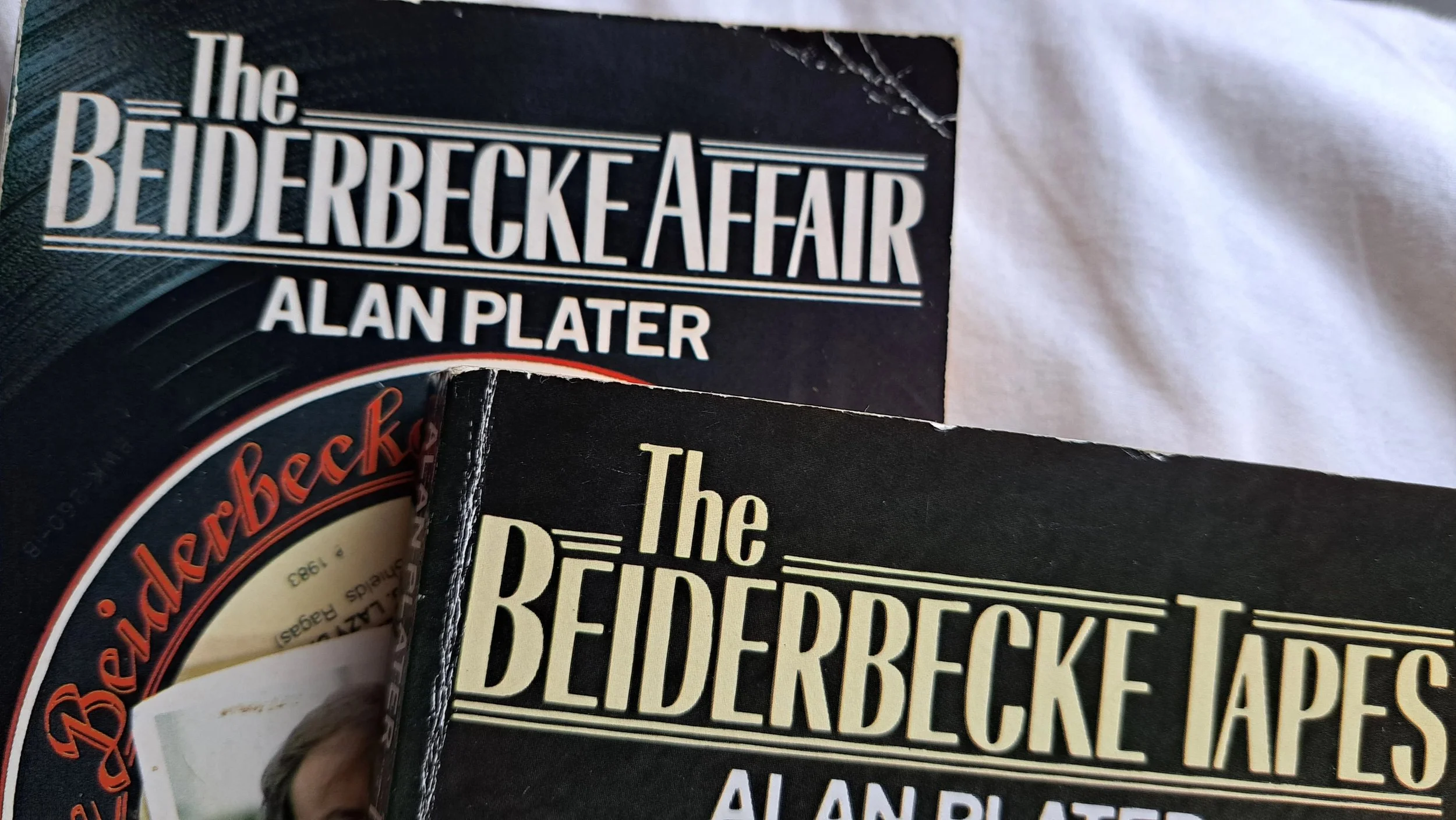
A member of the library, after some inner turmoil, nominated the first Beiderbecke book (‘The Beiderbecke Affair’ by Alan Plater) as a stand-in for the trilogy (followed by‘The Beiderbecke Tapes and ‘The Beiderbecke Connection’). I loved the TV series when I first watched it about fifteen years ago, and after the library member’s recommendation, I picked up two of the three cheaply on abebooks. (The third is a bit more pricey.) The first book came after the first series; the second book came first, and was followed by the TV series. As I rank the TV series so highly, I was pleasantly surprised that Plater had done such a good job translating TV into the book. The second book isn’t as good as the first (it lacks the stand-out characters: Big Al and Little Norm, Sergeant Hobson, Inspector Forrest: “You think I don’t know what a thesis is. Well I do. I’ve got a daughter at a polytechnic and she’s doing one. Great fat bundle of words about sod all.”) but still worth a read, and I’ll be giving the TV series a re-watch at some point soon. 

I’ve got a reading coming up at the Albert Poets in Huddersfield on Wednesday 18th February, along with John Duffy, Jeanette Hattersley, and Mike Farren. Last month, it was a lot of fun reading with fellow guest Bob Beagrie, who read (I say read—Bob performed) his brilliant collection ‘Hand of Glory’ from Yaffle Press, a delirious and riotous telling of the adventures of the only known surviving example of a hand of glory at Whitby Museum. Then online, for Explore York Libraries’ Finding the Words with guests Elizabeth Gibson and Alex McCrickard. Finding the Words is monthly, online, and free! Although Pay What You Can donations for the York library service are greatly appreciated. Their next event is on Thursday 19th February at 7:30pm, and features Jill Abram, Aoife Mannix and Joshua Seigal.

What with readings and online sales, I stocked up on copies of ‘Gain Access’. Speaking of which, the Wordsworth Trust, Dove Cottage reading has been re-scheduled for Saturday 11th April at 1:30pm, in person at the Jerwood Centre, Grasmere. Tickets free. This was postponed because of Storm Amy (we’re back at the start of the alphabet—at this rate, it won’t be long til we get to the end…). Happily this time, co-winner Annina Zheng-Hardy will be there in person (she was joining online last year, but can be there in-person for the new date), as will runners-up Sally Baker and Ilse Pedler. 


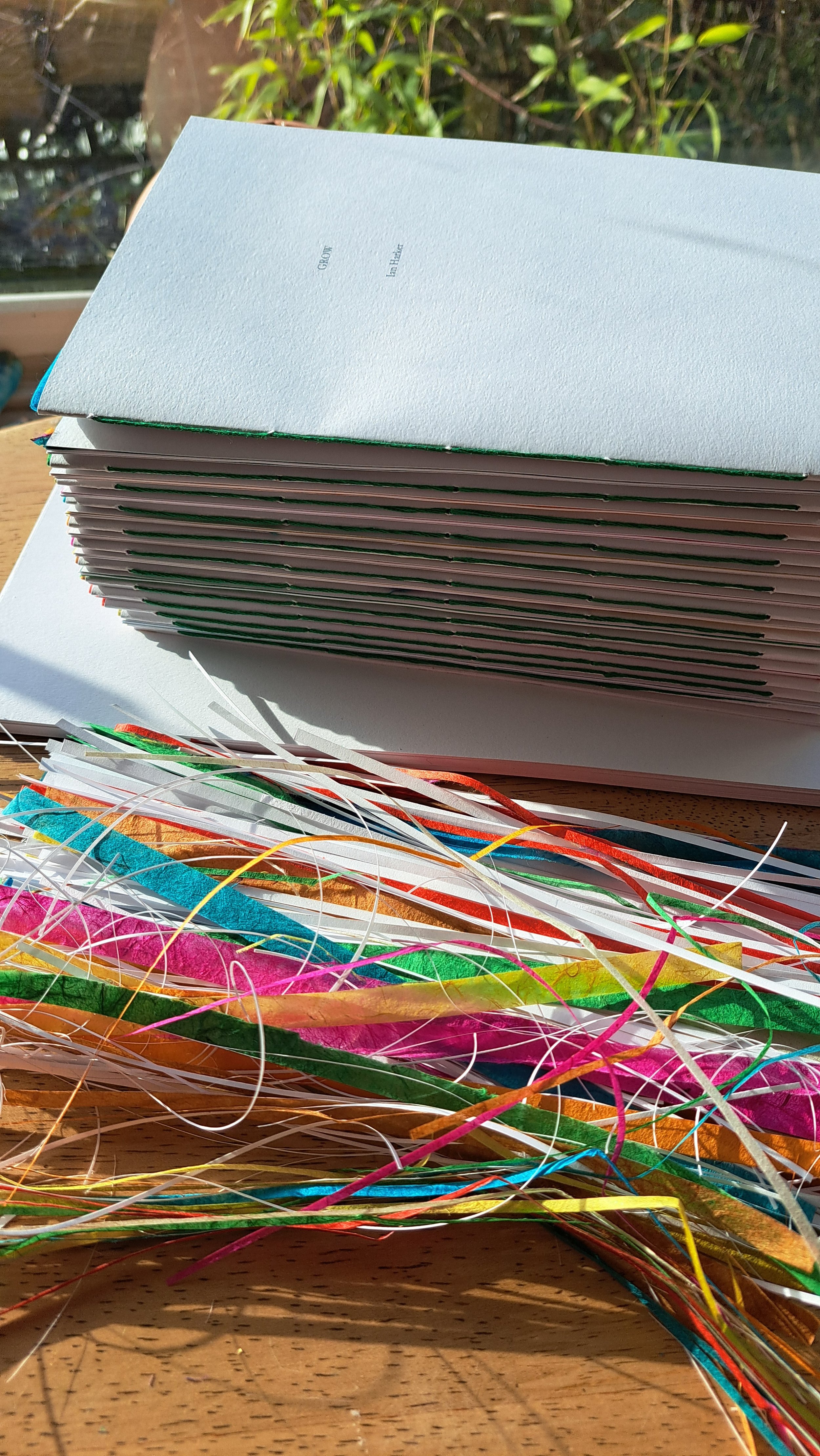
This week, I’ve been working on some hand-made pamphlets. I got into bookbinding after going to a workshop I programmed at the Leeds Library in February last year, run by the fantastic-tutor-and-generally-brilliant Linette from Leeds-based Anachronalia. I can’t recommend her workshops highly enough, especially if, like me, you’re totally new to bookbinding. More workshops with Linette coming up at the Leeds Library later in the year. It seemed logical to use what I’m learning to make some poetry pamphlets. ‘Grow’ is a sequence based on the life-cycle of the cannabis plant; an extended riff on getting stoned. I’m pleased with how they turned out. I’ll have them at readings (50 copies signed and numbered!) and will add them to my shop soon.
New blog for 2026

Happy New Year! I hope you're all had chance for some time with family and friends over Christmas, and for some down-time. How's your writing been going? From my experience, the festive period can be a difficult time to read and write, what with all the merry-making. And the two—reading and writing—go hand-in-hand for me: if I'm not reading any poems, I'm almost certainly not writing any. 

I've read some brilliant books this year. Even so, since finding out in early March that ‘Gain Access’ was going to be published, I've been in editing and promoting mode. Speaking of which, I've got two readings coming up in January:

Under the Lobby Lights, in person at The Lobby 1867, Wakefield, Wednesday 14th January, from 7:30pm, with Bob Beagrie. Email underthelobbylights@gmail.com to request an open mic slot. 

and

Finding the Words, online on Thursday 22nd January, 7pm to 8pm, with Elizabeth Gibson and Alex McCrickard - free tickets here: https://www.tickettailor.com/events/exploreyorklibrariesandarchives/1942861

I’m also working on readings later in the year, including the date for the re-arranged event at Dove Cottage, Grasmere, which had to be postponed due to a storm; and a possible reading in Ireland. If you’re an organiser of a poetry event and are looking for readers, give me a shout. You can read more of my work in the ‘Poems’ section of this website.

On average, I write around 50 poems a year, and 2025 is on a par with that; however, I went on a writing retreat in early December on the East Coast, and I found those four days really productive—bumped up my numbers a lot. 

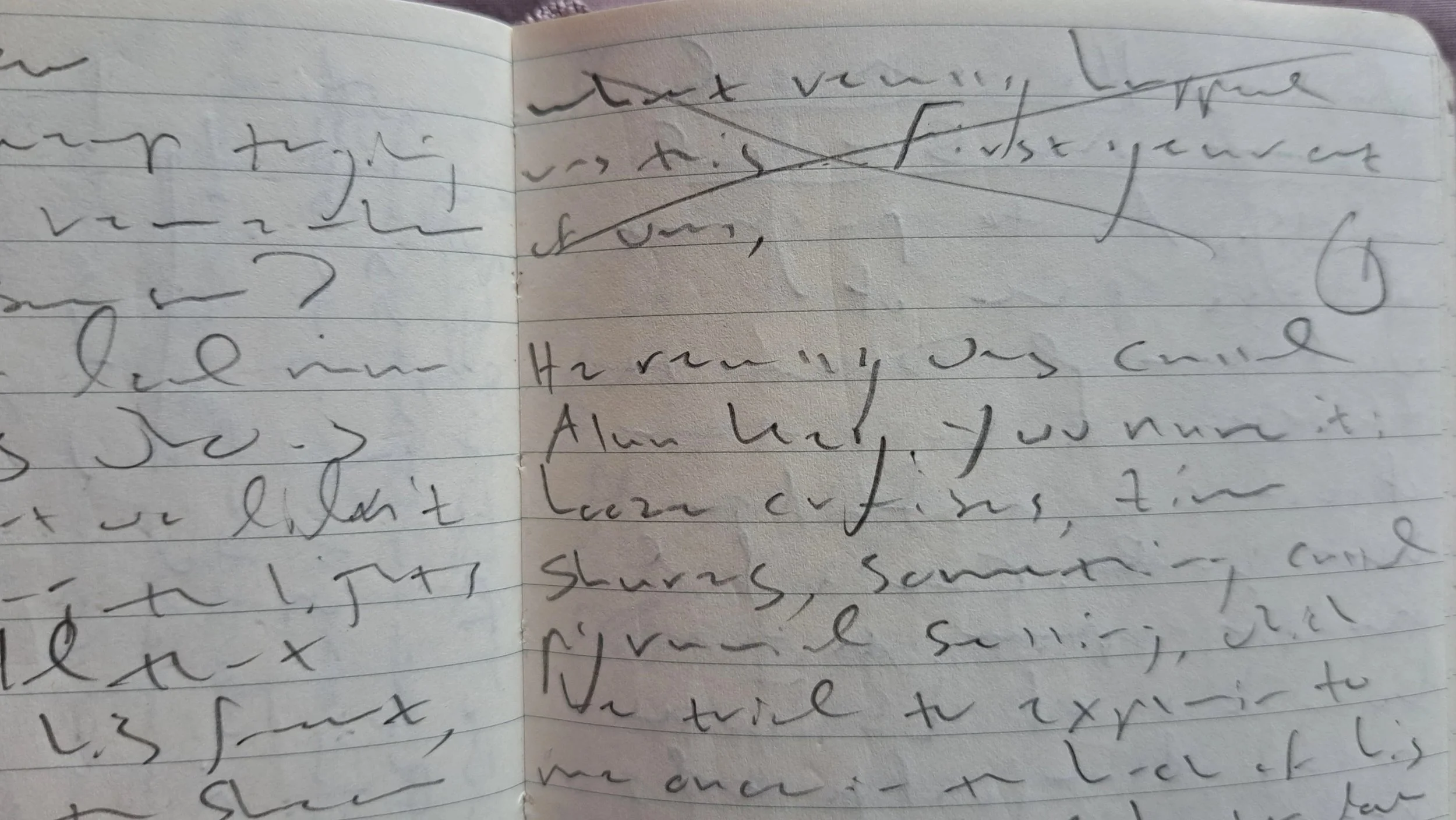
I'm not normally one for ‘morning pages’. I know lots of writers find them hugely helpful—writing whatever comes into your head or from using a prompt as early as you can after you wake up to make the most of the fuzzy ‘dream state’—and it can be especially useful if you're raising a family or caring for someone or working crazy hours. But normally all I can manage pre-9am is downloading bus tickets. 

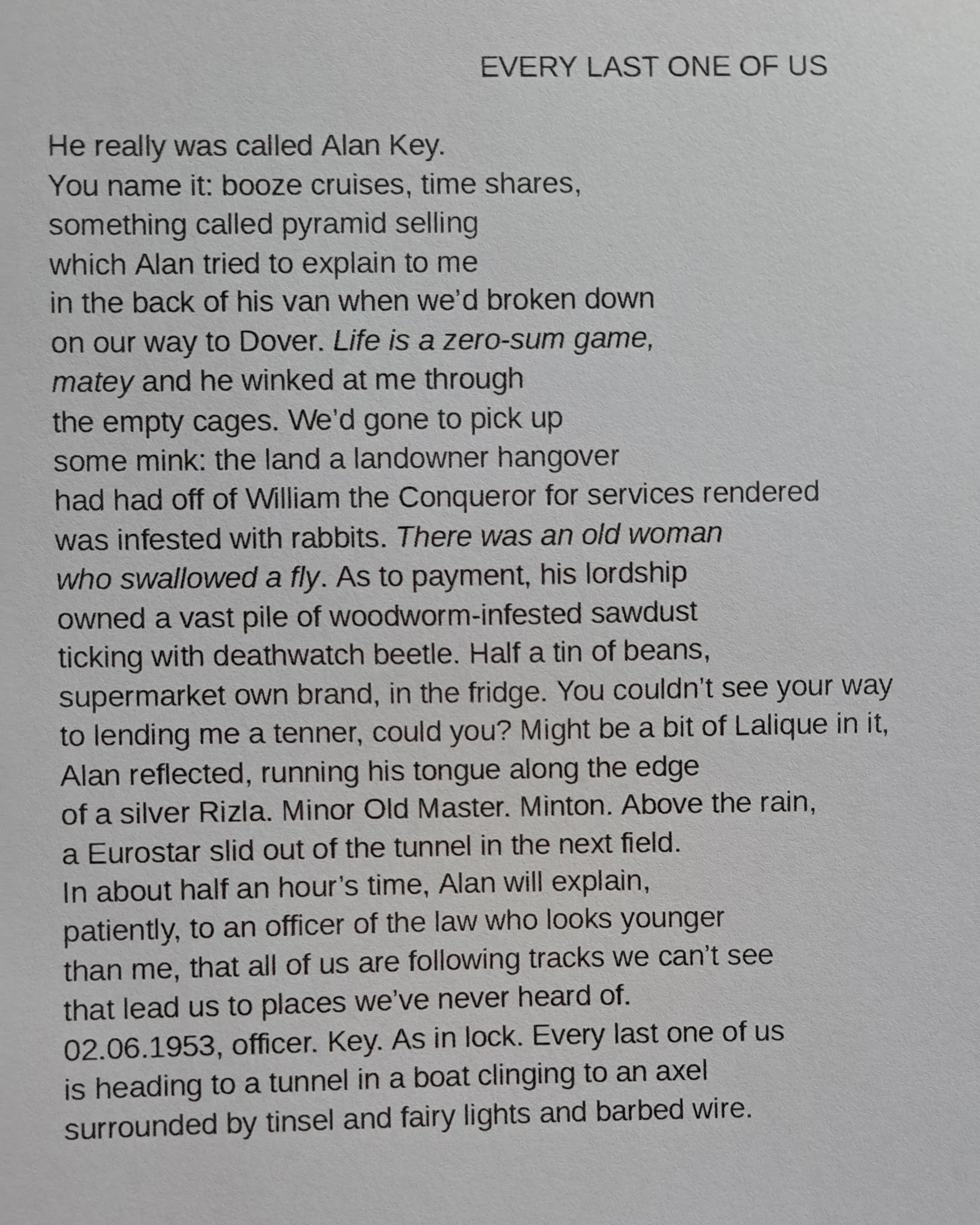
But one morning I used the prompt (“What really happened was this…”) and I started with a sentence “First year out of uni,”. I think the kettle then boiled and as I was getting up, out of nowhere (thank you, fuzzy morning brain) came the phrase “He really was called Alan Key”. Then came a poem, featuring one of Alan's escapades, including his side-kick (fresh out of uni). They're off to Dover to pick up a consignment of Mink.

Let me introduce you to Alan—although I'm just getting to know him myself. 

I've got 10 Alan poems as of today. He's emerging as a sort of Northern Lovejoy, without the specialism in antiques. Or maybe Big Al from the Beiderbecke Affair would be more accurate. Hope you enjoyed the poem. I'm looking forward to finding out more about Alan in 2026. 

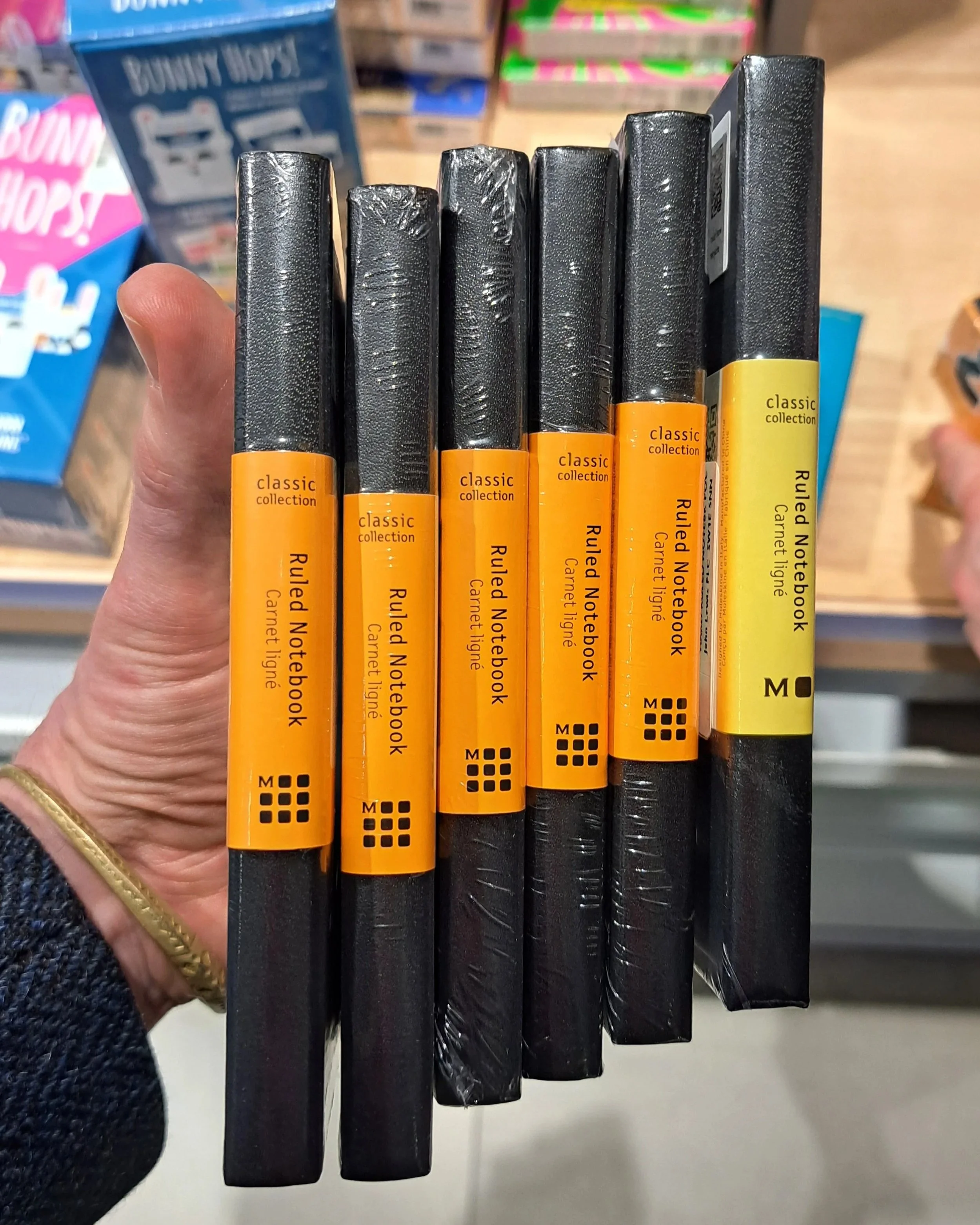
Speaking of writing. I'm a sucker for Moleskines, and have exclusively used black hardback Moleskine notebooks since 2003. Personally, it's really important to write by hand—I can't be doing with writing a new poem on a computer or my phone unless I'm caught in a notebookless-emergency. A chance discovery in John Lewis in the sales was six of the buggers reduced to £9.25 each. They're normally £17.99, so I snaffled three years worth of notebooks and saved fifty-odd quid.

But, as I say, no writing for me unless I'm reading. I'm looking forward to John McCulloch's new poetry collection ‘Crowd Voltage’, coming through Bloodaxe in March. I came across ‘Reckless Paper Birds’ three years ago, and loved it so much I went out and bought ‘Panic Response’ within a week, which is also excellent. There's a lot of joy to be found in the world through his eyes, and we need more of that.

'Gain Access' launch & readings

I was completely bowled over to have my collection of poems ‘Gain Access’ chosen, along with Annina Zheng-Hardy, as one of the winners of the 2025 Book & Pamphlet Competition, run by the poetry Business and judged by Kim Moore.

‘Gain Access’ is a collection of poems based on my time working in social housing in Leeds.

Kim Moore said: ““I’ve always loved poems about work, but I’ve never read anything quite like this. Written from the viewpoint of a social housing officer, we get an insight into the emotional toll it takes to do a job where you want to help people but instead become part of an under-resourced system that is often casually cruel and fails the people it should be protecting. These poems are full of humour, keen observation and insight about society and our roles within it.”

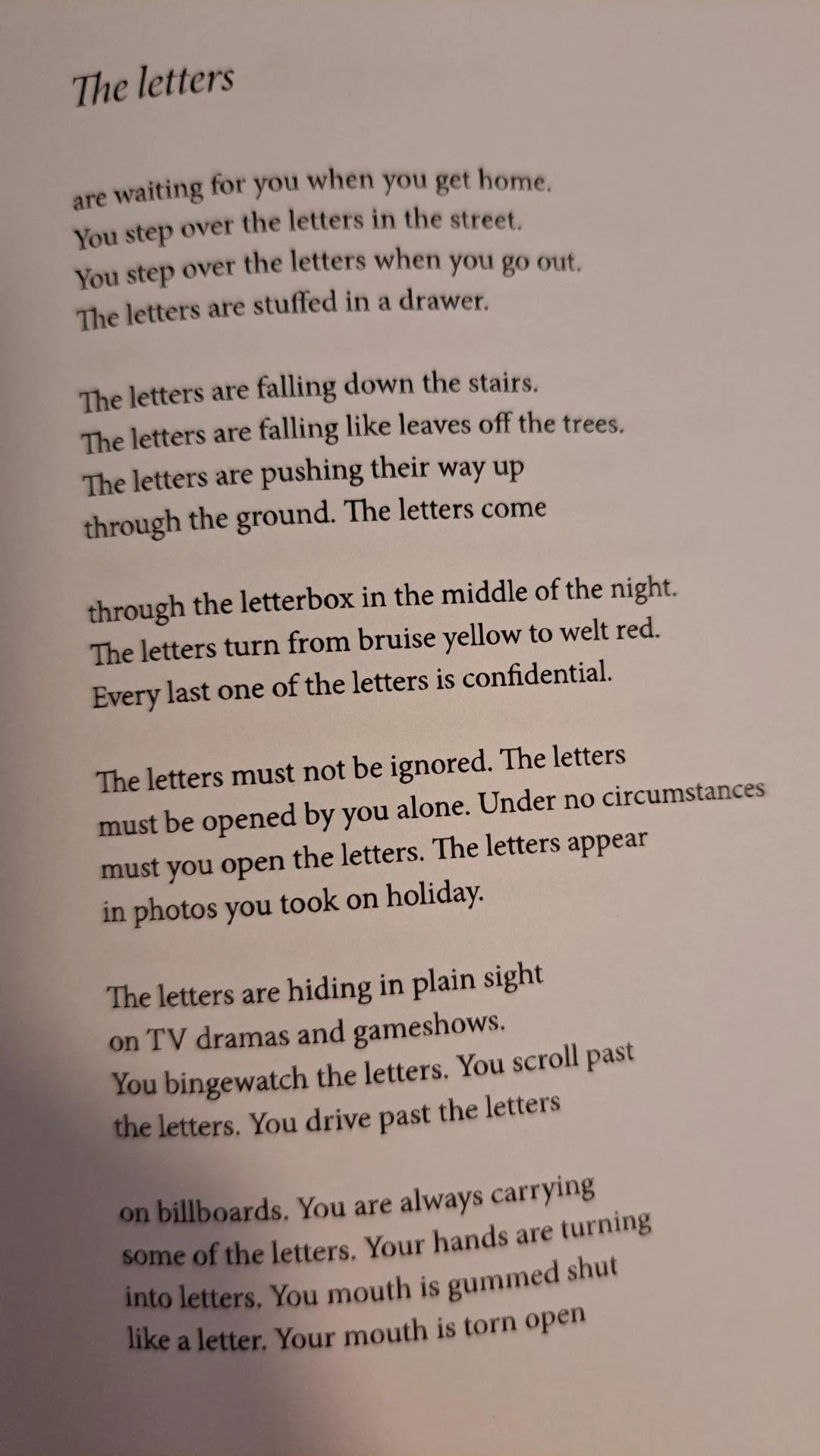
Here’s a poem from the collection.

‘Gain Access’ launches at the Wordsworth Trust’s Jerwood Centre, Dove Cottage, on Saturday 4th October, at 2pm. Tickets are free, and are available here. Junners-up from the competition Ilse Peddler and Sally Baker will also be reading.

I’ll be reading at a celebration of the Poetry Business’s brilliant The North magazine, which has its 40th birthday this year. That’s on Saturday 18th October, at 3:30pm, and tickets are £12/8. This is part of the poetry day at Ilkley Lit Fest - make a day of it if you can!

Then there’s a launch in Leeds on Saturday 25th October, also at 2pm, with two special guests (to be announced soon!) and MC Joe Williams.

A Cloud of Witnesses: discovering the 'mollies' of queer London

On 9th May 1726, three men—William Griffin, Thomas Wright, and Gabriel Lawrence—were hanged at Tyburn in London for (as the courts and newspapers invariably put it) the abominable crime of sodomy.

They had been arrested, along with forty or fifty other men, in a raid on a queer space—a ‘molly house’ run by Margaret Clap. Mrs Clap had—according to reports at the trial—filled her premises in Holborn with beds for the convenience of her customers. One newspaper reports:

There were 8 or 9 of them in a large Room, one was playing upon a Fiddle, and others were one while dancing in obscene Postures, and other while Singing baudy Songs, and talking leudly, and Acting a great many Indecencies. 

There were many such ‘molly houses’ across the city. One writer estimates that there were more queer venues in London in the Eighteenth Century than there were in the 1950s. But there were plenty of trials, too. The Buggery Act of 1533 (created in a sort of post-Brexit legislative shake-up after Henry VIII's break with the Catholic Church) made sodomy a crime punishable by death. This was the act under which gay men in the Eighteenth Century were prosecuted.

I stumbled on this subject a few years ago, while researching my family tree. I was looking for any references in old newspapers to a man I thought I might be distantly related to. He lived in London, which none of my other ancestors did; and I wanted to find any evidence of him moving down from the north of England. No joy. But what I did find was an account of him being arrested on suspicion of committing ‘the abominable crime of sodomy’ in a ‘necessary house’ in the capital. As it turned out, I'm not related to him, but I wanted to see if there were any other such trials from around the same time. 

There were plenty. Cottaging has a long history, and so do homophobic laws. A typical report, from the same year as the raid on Mrs Clap’s, reads:

Yesterday at Guildhall two Men were convicted of attempting to commit the detestable Sin of Sodomy; and were sentenced to stand in the Pillory; the one in the Minories near Aldgate, and the other in Smithfield.

Some of the accused were acquitted. Some where fined and imprisoned. Many were made to ‘stand in the pillory’—a hideous punishment in itself, which killed at least one man convicted of sodomy.

These reports stayed in the back of my mind. I wanted to use the material in a poem. Working at the Leeds Library (surrounded by historical material, including Georgian newspapers) renewed my interest, and in September 2023 I started looking again for reports relating to trials of gay men in Eighteenth Century London. 

I went back to the newspaper reports. They range from reports of arrests and trials to bile-filled letters to the editor and gossip. 

Then I found the Proceedings of the Old Bailey. All surviving records from trials at the Old Bailey from 1674 to 1913 have been made available online, not just digitised, but transcribed and searchable. You can search by offence, including ‘sodomy’. How trials were recorded varies; but for the period I was interested in, a lot of detail is included—witness statements, sometimes full verbatim minutes. These records contain the most detail, and sometimes we hear the voices of the men themselves—the ‘accused’.

These men come alive on the page. We can hear their voices—hear them singing at Mother Clap’s, hear them in the dock defending themselves, hear what they said as they were apprehended. One man, standing with his lover before a judge, says: “This Imprisonment has almost cost me my Life; I have almost lost my Limbs, my Legs are swelled, and my Feet almost numbed and dead; so that if I was to lie as much longer I should be dead; as to being disguised, I have lost my Clothes and Linnen, or I would not have presumed to have waited on your Lordshipin this Pickle.” They were found guilty and imprisoned and made to stand in the pillory.

But most of the voices are those of the persecutors, not the men themselves; and I knew that any poem I wrote would have to develop a voice or voices that spoke against the voices in the archive—contradicting them, developing what’s largely absent and inferred: a lively and joyful queer community having fun and having sex—lots and lots of sex.

The poem is called ‘A Cloud of Witnesses’. It contains material from the newspapers and the courts—the title is a phrase used to describe the number of people who gave evidence against one accused man. But woven between and against and around the cloud of witnesses is another voice, made of an amalgamation of voices, speaking for itself, speaking against the salacious, shrieking bigotry of murderous officialdom. As one man said as he was apprehended with his breeches down with another man against—as it goes—some church railings, “Can't I use my own body?”

I read excerpts from the poem at Rhubarb at Triangle in Shipley earlier this year; and at Word Space in Horsforth. But the poem continues to develop, and the material keeps coming. The picture of queer London gets richer and richer.

‘Out of Time’ - The Leeds Poetry Festival competition 2023

The Leeds Poetry Festival runs from Monday 10th - Sunday 16th July, staging an amazing programme of poetry in the spectacular Left Bank. The full programme is here, including the second performance of the Poetry Supertram (containing 100% more Lionel Ritchie than our original performance at Chapel FM last year) with Joe Williams, William Thirsk Gaskill and Irene Lofthouse. Don’t miss Supertram on Sunday!

The annual competition anthology ‘Out of Time’ was launched on Monday 10th July, and I was delighted to have a poem on the longlist. The shortlisted poems we heard at the launch were all excellent, and I’m looking forward to reading the rest of the anthology; all the more so because the cover is stunning. It’s designed by Fran Haslam, whose work you can find on Etsy here.

Responding to the theme ‘Out of time’, the poem is an exploration of my family’s history through a single object - my granddad Harry’s wrist watch. The poem references his time as a printer at Waddingtons (we were never short of board games…), as well as the fact that his own grandfather had been a policeman in Leeds.

Congratulations to everyone in the anthology, and to the competition winners, and get down to Left Bank for the festival this week!